
Project Vaayu: The Environmental and Social Impact
Updated: Jul 21, 2024
Unlike conventional air conditioners that consume large amounts of electricity and emit greenhouse gases, our motive is to require minimal energy, thereby reducing the carbon footprint. According to the Bureau of Energy Efficiency (BEE) in India, air conditioners contribute to about 28% of the country's total residential electricity consumption. Assuming that the average air conditioner runs for over 8 hours every day in the summer months, it would produce over 16 kg of CO2 per day. With millions of air conditioners in use across Delhi, the total emissions are staggering; they would collectively emit around 58.4 million metric tons of CO2 annually.
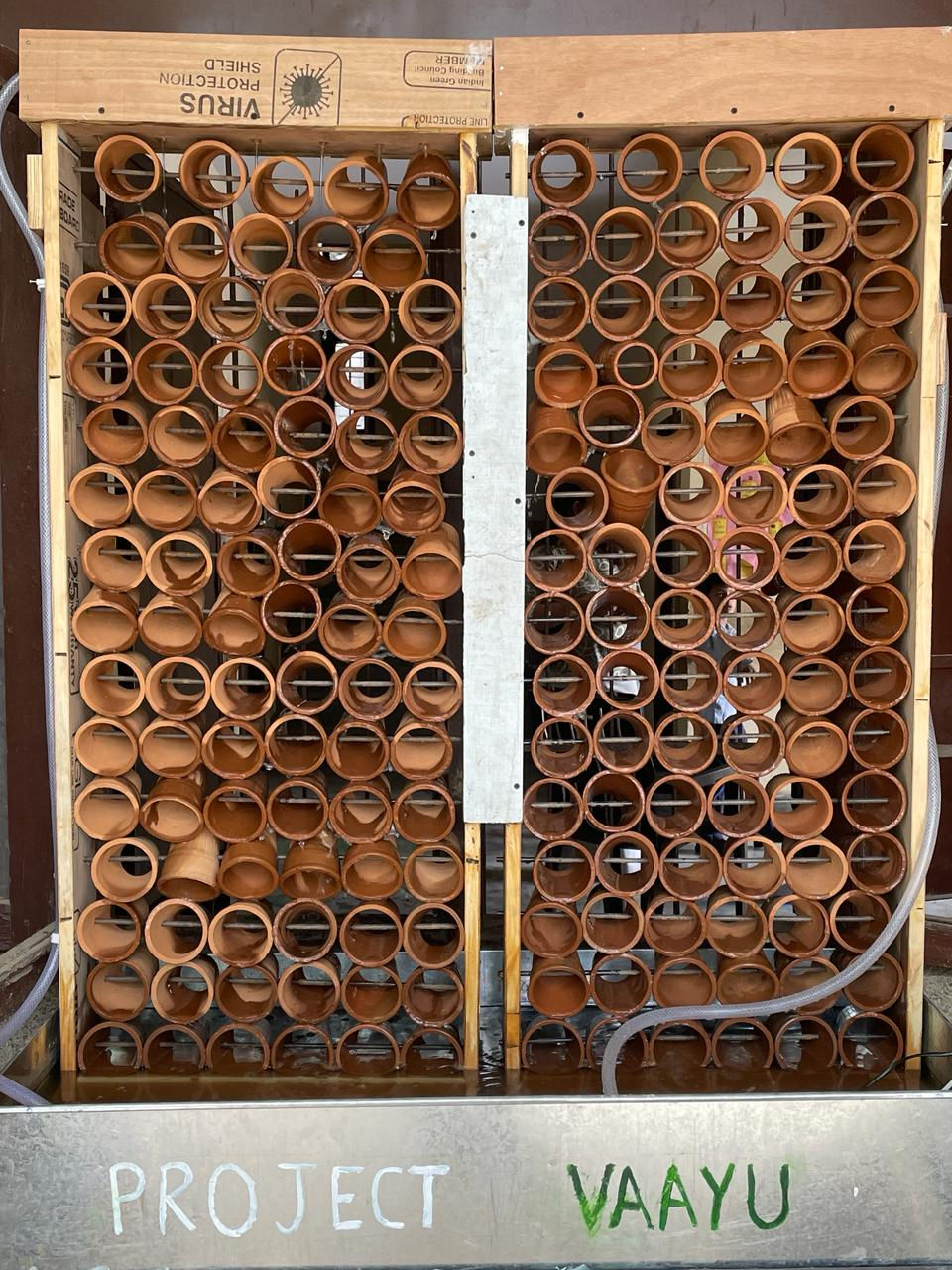
In Delhi, chai vendors on the streets use hundreds of terracotta ‘kulhads’ on the daily, which end up as waste. Thus, Project Vaayu utilises these used cups to create sustainable air coolers, encouraging sustainability. Project Vaayu's implementation in government schools significantly enhances the well-being and development of students. By providing sustainable cooling solutions, the project creates a comfortable learning environment, directly impacting students' mental, social, emotional, physical, and academic development. Mentally, cooler classrooms help students concentrate better, leading to improved cognitive function and academic performance.
Socially, the comfortable environment encourages better peer interactions and collaboration, as students are more likely to engage with one another in a pleasant setting. Emotionally, reduced heat stress contributes to overall well-being, lowering instances of heat-related illnesses and absenteeism. This ensures students remain healthy and emotionally stable, ready to participate actively in school activities. Physically, the project enables children to play outside and engage in physical activities without the risk of overheating. This is crucial for their physical development, as it encourages exercise and play, which are essential for growth and overall health.
Moreover, children are less likely to suffer illness due to less exposure to extreme heat within school hours. Academically, a comfortable classroom environment enhances focus and retention, leading to better academic outcomes. Students can concentrate on their studies without being distracted by the oppressive heat, enabling them to achieve their full potential.


Comments