
Combating Urban Heat: Project Vaayu's Eco-Friendly Cooling Solutions for Gurgaon and Delhi
Updated: Jul 21, 2024
This year, the temperatures in Gurgaon and Delhi reached soaring heights, causing numerous heat-related illnesses and unbearable conditions outdoors. For people living in the comfort of their homes or apartments, this problem is fixed by turning on the air conditioner to escape the heat. However, the heat released by the air conditioners only makes the conditions outside worse by releasing gases that further heat the surrounding area. This creates a vicious cycle whose end product is the constant deterioration of our environment.
Global warming, a consequence of increased greenhouse gas emissions, has resulted in significant temperature rises worldwide. Air conditioners, commonly used to combat heat, exacerbate this problem by emitting harmful gases such as hydrofluorocarbons (HFCs). These gases are potent greenhouse gases, with a global warming potential thousands of times greater than carbon dioxide. The science behind this lies in the operation of air conditioners, which release heat into the atmosphere while cooling indoor spaces, creating a localised heat island effect. Additionally, air conditioners consume large amounts of electricity, primarily generated from fossil fuels, further contributing to global warming.
In India, the effects of global warming are becoming increasingly severe. According to the Indian Meteorological Department, the country experienced its second hottest year on record in 2021, with temperatures consistently rising above 40 degrees Celsius in many regions. Heatwaves are becoming more frequent and intense, posing serious health risks and impacting productivity. The National Disaster Management Authority reported that between 1992 and 2018, over 25,000 people died due to heatwaves in India. This alarming statistic underscores the urgent need for sustainable cooling solutions.
The situation is particularly dire in urban areas like Gurgaon and Delhi, where summer temperatures can exceed 50 degrees Celsius. These extreme conditions not only affect the general population but also have a profound impact on vulnerable groups, such as students in government schools. Most of these schools lack air conditioning, leaving students to endure sweltering classrooms that hinder their ability to learn and participate in physical activities.
Addressing the dual challenge of providing effective cooling while minimizing environmental impact is crucial. Traditional air conditioning solutions are not viable in the long term due to their high energy consumption and greenhouse gas emissions. Therefore, innovative approaches that utilise sustainable materials and methods are essential. We must notice that in a country like India, where most of the population is under the poverty line, air conditioners and coolers are inaccessible.
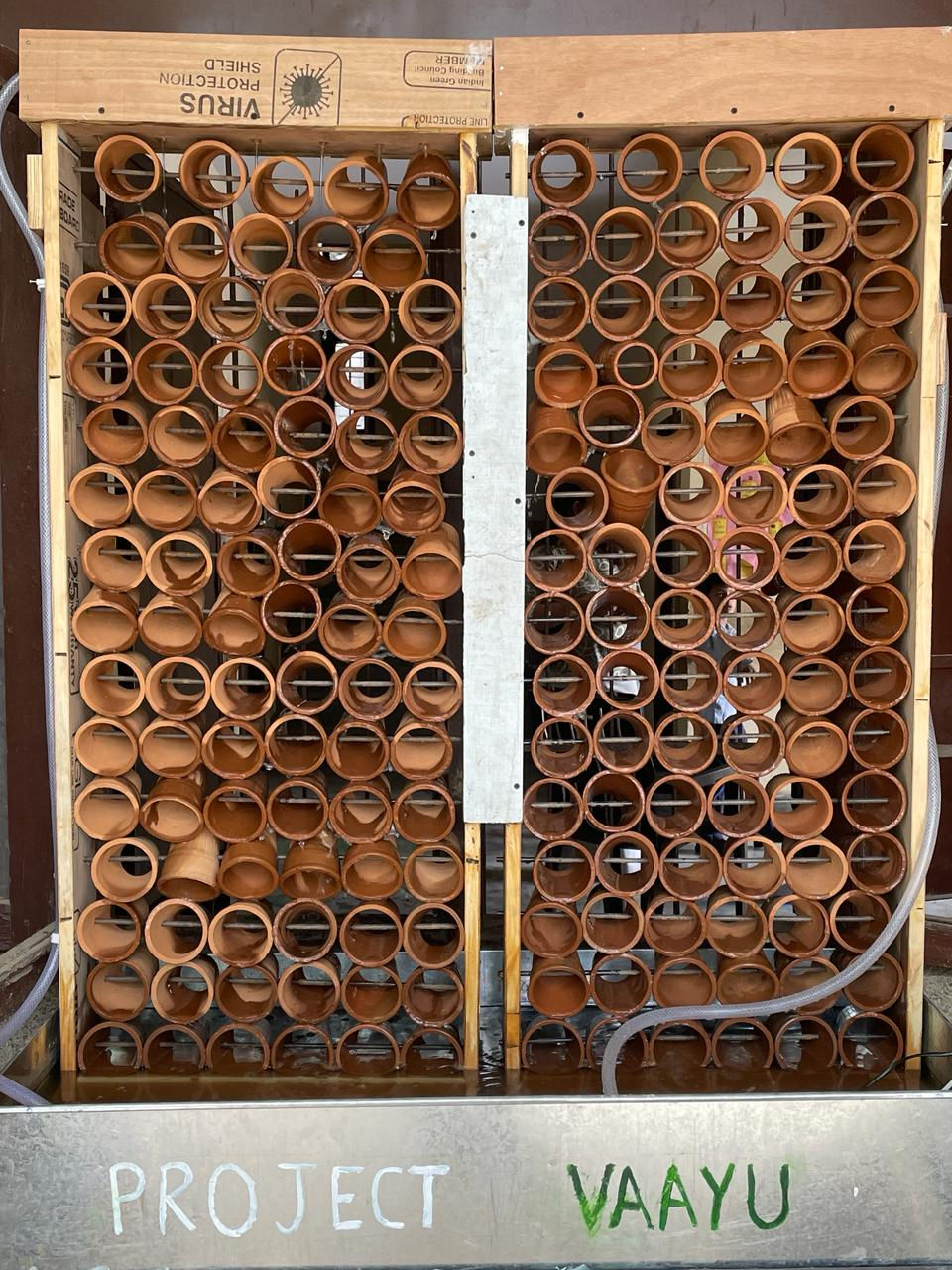
Project Vaayu aims to change this scenario by implementing eco-friendly cooling systems using terracotta, a natural material known for its cooling properties. This initiative not only provides relief to students but also contributes to reducing greenhouse gas emissions, helping combat global warming at a grassroots level.


Comments